Kim
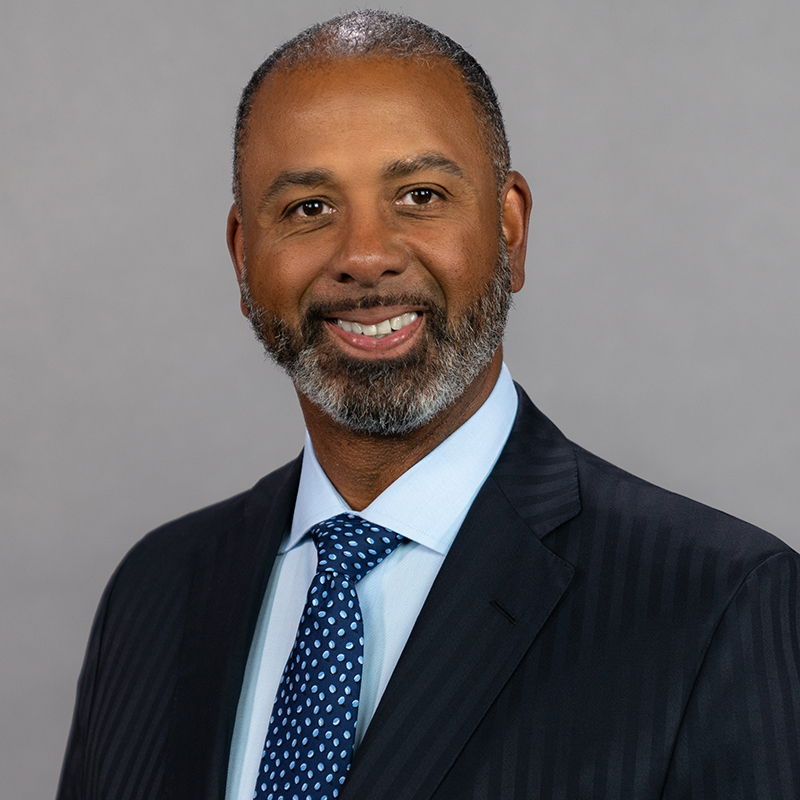
Hello, everyone. I’m your host Kim Thiboldeaux, and welcome to NEBGH Voices. It’s October, and I’m sure, like me, you have seen and maybe even participated in any number of events and marketing campaigns supporting Breast Cancer Awareness Month. On today’s show, we’re going to take a step back and examine what impact these efforts are having. What is the state of breast cancer diagnosis and treatment, as well as explore why disparities for some groups still persist. And as always, we will include some insights and actionable steps that can help your workplace thrive. I’m thrilled to have with us today Dr. Marc Watkins. Dr. Watkins is a board-certified physician, executive, and nationally recognized leader in retail health, population health, and employer-focused care innovation. So, welcome to the show, Dr. Watkins.
Dr. Marc Watkins
Kim, thank you so much for having me.
Kim
Well, let’s jump right in, Dr. Watkins. Can you tell our listeners a little bit about yourself, your experience in public health, your background, and what drew you to this field?
Dr. Marc Watkins
You know, absolutely, it’s my pleasure. I’ve had more than two decades of experience in population health and public health. I’m a board-certified physician, as you’d mentioned. With my training and background, especially having the opportunity to serve in the United States Navy, really helped me focus on populations throughout my career and understanding that populations at scale have variability, and that this experience reinforced something I believe throughout my career: where and how we deliver healthcare matters just as much as the healthcare itself. However, you can have extraordinary medical science, you can have outstanding physicians, innovative treatments, but if people can’t access the resources when they need them, then they’re not realizing their full value, and so that was always my goal. And especially moving from private practice into organized medicine, leading large physician groups, and then ultimately during my stint at Kroger, it was really to understand that it was more important to keep the healthy well, than just always fighting disease. But understanding that when disease sets in, that we really need the opportunity to make that ability for them to access care and have outstanding treatment is incredibly important. And that’s why I’m so focused on this effort. It’s really to help bend that cost curve and also keep quality top of mind for employers these days.
Kim
I love that. That’s a great way to kind of set the stage for our conversation. And I always like the World Health Organization definition of health and wellness. It’s not just about the absence of illness, but it is about also the presence of wellness. So I think that, you know speaks to some of the grounding that you’re sharing with us in your in your opening. I really appreciate that.
Dr. Marc Watkins
My pleasure.
Kim
Let’s dive into the topic at hand here: breast cancer, the state of breast cancer, diagnosis and treatment. What do you think the impact of the breast cancer awareness month campaign has been, for example, are we seeing a decrease in mortality rates? Are we seeing progress in diagnosing the disease? Are women living longer? Are people encountering less stigma when they say they have cancer? I’d love to hear your take on this campaign, which is decades long at this point.
Dr. Marc Watkins
At this point, you know it’s incredible. You’ve seen just the adoption through mainstream, even sporting events like the NFL adopting the Breast Cancer Awareness Month. You know, Breast Cancer Awareness Month is so popular in October that many things happen. It’s been enormously important in making breast cancer more visible and a public health priority. I’d also like to say that it’s normalized the conversations about screening, survivorship, treatment, and just the general experiences of how women are living with the disease. And and then to your point, has it had an impact? Of course, it has, right? Between 1989 and 2023, there’s been a 44 percent reduction in breast cancer mortality in United States. Has that been impacted alone by breast cancer awareness? No, absolutely not. But it’s been an incredible proxy to contributing to the overall public engagement. But we need to take into account that during this period of time, we’ve had successful innovations in things like clinical care improvement, our pharmaceutical and chemo and therapies have been incredible. But awareness is not the same as action. We need to make sure that we get to the next stage that that breast cancer awareness month can move from just awareness to accountability, and it’s no longer enough to ask whether women know about breast cancer, but we need to ask whether that knowledge is translating into timely diagnosis and effective treatment and longer lives, or are they living longer? And is it costing us less to have them live longer?
Kim
Yes, I think that’s a great point. I want to talk about a couple of specific populations. I’m curious: are we seeing the same rates of improvements with metastatic breast cancer? Are people diagnosed with advanced metastatic breast cancer living longer? I’ve worked in cancer for 25 years. I’ve heard some people say, “I don’t identify with the pink ribbon because I don’t identify with the race for the cure because I have advanced metastatic disease will not be cured of my disease.” But are we seeing these women living longer with metastatic disease?
Dr. Marc Watkins
Well, I think there’s a couple of ways to look at it. When you look at it just by the numbers, the survival rate for women diagnosed with distant stage breast cancer is about 34%. So overwhelmingly, the survival rate is not good. But we have seen substantially increased survival rates for localized breast cancer, which then double clicks back to, so, I’m thinking, you know, let me just for the audience, localized either stage one or stage two. This means that it’s really confined to the breast tissue; it hasn’t spread anywhere else, and so that really double clicks on how effective early screening can be to inform treatment that has a 99% survival rate. So let that sink in for a minute. Although that we’ve improved five-year survival mortality for those with distant stage or stage four breast cancer, it is much more improved from a localized stage one, stage two. That the outcomes are much better.
Kim
Therefore, reinforcing the importance of detection, early detection, screening, following those guidelines that are available to us.
Dr. Marc Watkins
Absolutely.
Kim
Yeah, I would also like to talk a little bit about black women and breast cancer, the American Cancer Society has some key statistics, some sobering facts, really about black women and breast cancer. We know that at every stage, black women are more likely to die from breast cancer than any other race or ethnic group. White women are slightly more likely to develop breast cancer than black women, but black women have the highest death rate from breast cancer. Why, Dr. Watkins, are we seeing these disparities for Black women persist? And are there any other theories about black women and other women of color who are diagnosed at later stages? Are we looking at things like social determinants of health? Are there inherent biases in the healthcare system? Perhaps mistrust of the system? What do we know about some of these statistics around women of color and breast cancer?
Dr. Marc Watkins
Yeah, and according to the American Cancer Society, black women have a cancer death rate of roughly 37 to 42% higher than white women. So, you know, when we look at that as a as just an easy remember number. It’s around 38% overall. That’s one factor. The second is we have a younger age disparity for women under 50, black women face double the cancer mortality rate of white women. And then let me just emphasize for your your audience and your members, any time that we have a cancer diagnosis, especially a cancer diagnosis like breast cancer in a younger person, the likelihood of it being more aggressive is high, and so that we know that when black women have a lower rates of survival across every known stage of breast cancer, but in particular when they’re diagnosed later in their course, right? So meaning they’re not caught at a stage one or stage two. If they’re caught in a stage four, you know that’s going to be a worse outcome. So delays in care, although mammography screening rates are comparable between black and white women, black women experience longer delays between an abnormal mammogram and follow-up diagnostic testing or treatment. Let that sink in for a moment, and this is where your audience and your employers can really develop some policies and in place through your administrative service organization, your brokers through medical policy to say, “hey, let’s speed up that time between an abnormal mammogram and the next best step.” So that’s one right. And I think some of the things that you mentioned is there their differences in biology. You know that there are some, but you know, we we’ve seen some studies indicate that black women have a higher frequency of some inherited mutations in in BRCA 1 and BRCA 2 genes, Bard 1, and others. But that can make it more difficult to treat the cancers. And then you mentioned socio-economic factors and systemic factors. You’ve also mentioned things like inherent bias and racism that can happen. That happens with other types of treatment. And then I think it’s important for the audience to hear that many times at a stressful emotional diagnosis like breast cancer sometimes, unfortunately, black women aren’t heard. It’s difficult for them to sometimes express what they’re feeling in an office where they’re overwhelmed. Their care team may not look like them, may not have the same cultural beliefs, may not have familiarity with the group, and so sometimes this is described as you know this chronic elevated stress playing into potentially hard for the care teams to really dig in with the overall progress in the treatment course for these women. So those are a couple things that happen, but I can’t de-emphasize that there are some potential inherent biases that happen in the treatment. Unfortunately, when we try to treat everyone as the same, and we try a one-size-fits-all approach. I think that’s a situation where we may miss the mark. And speaking frankly, if we do that as clinicians, especially with a group that has such a high mortality rate from breast cancer, we have to dig in and treat this group and this population a little bit differently than a majority population, and say, hey, we have to be aggressive around things like molecular staging, understanding what the molecular consistency of this tumor looks like. Second, are we getting genetic testing timely? Because both together will help inform treatment and the right medications and the right chemotherapies, which can reduce the overall cost, but more importantly, because you’re not wasting or going through trial and error, but more importantly, you’re targeting the treatment and making it personalized to that individual.
Kim
Yes, and I think that our employers are certainly investing heavily in many of the resources to help their employees navigate through a cancer diagnosis, but I think asking all the questions that you are describing: are those resources relevant for all of their employees and their populations? Are they being offered and utilized equitably? Are folks being made aware of those resources and how to best access them? So I think you’re raising some good questions. Certainly for our audience to think about, Dr. Watkins. I want to shift gears a little bit. I know you’re involved in a project called NEA. Can you tell us about NEA and why did you decide to join the project and how do you hope it will improve the stage, particularly at which many black women are diagnosed with breast cancer.
Dr. Marc Watkins
Yeah, and I think when I was first introduced to NEA, what really struck me the most was that here is a discreet, interactive tool that someone can use in the privacy of their own home, their office. They could put in, you know, very personalized responses and get an unbiased question or an actually an unbiased response. So pardon me, that they could put in their input and get a unbiased response back. And I think the opportunity to personalize that and make it speak to the participants in a manner in which they were comfortable was very, very appealing to me because that that meant we were actually meeting people where they are and my hope from that is that with NEA we can help more women move from awareness to appropriate screening, and then to timely diagnosis. That they’re more engaged around their Jerry. Not to say that they’re not, but are they accessed or have access to knowledge and awareness that can help them understand what is their best course of action during treatment, but also that “Are they getting what they need?” And I think that was a very, very important message to me. And it wasn’t something that needed to be driven by just the employer alone or the health plan, but this could be something that was at arm’s reach to a black woman or any, or any women at any time, so that they would really understand things like appropriate screening, reducing diagnostic delays, and then moving to and better outcomes, and really improving survival.
Kim
And is this tool being rolled out through different partners this month, being made available to folks throughout the community, nonprofit partners, corporate partners.
Dr. Marc Watkins
I think that’s the plan, you know, I think with with NEA and October being Breast Cancer Awareness Month, it’s a good opportunity to try to elevate NEA’s engagement as much as possible.
Kim
Great, great. Well, we will be sure to learn more about it and make sure our members are aware of it as well. Based on your experience, are there any other efforts that you’ve seen that you thought were particularly impactful or innovative or things that could serve as a model or be you know implemented elsewhere. Where are you seeing us sort of moving the needle on some of these issues around again prevention, screening, early detection, but also biomarker testing, treatment pathways, psychosocial support. You know, where are we doing it well? Is there anywhere we’re doing it well, or other places where there are some models that we might want to look at a little more deeply.
Dr. Marc Watkins
I think some of the most promising approaches really share just a common thread. They bring healthcare closer to people and reduce the burden on patients to navigate complex systems or even complex diseases like breast cancer. I think one standout example is patient navigation. How do you help women schedule appointments, understand results, overcome barriers? Right, like, just delays with specialists or delays with insurance payments. Understanding those types of things, community outreach has been another with trusted organizations and things like faith communities, I’m encouraged by bringing healthcare to the people, to the communities. So mobile mammography has been good for improving screenings in communities. I don’t think they’re as successful in the working population because when these screening events are happening, many of these women are at work, right? So that that is something that’s a little bit of potentially an opportunity to improve that. I’m also seeing a lot of potential in some of the AI or data driven approaches that identify gaps in screening and then follow through to diagnostic follow up. I don’t also always prescribe to the thought that technology alone is going to solve some of these things for us. One of the things that I’ve encouraged employers to really begin to think about is a dedicated primary care involvement for their population. This isn’t just for women, but men as well, and their entire population should have a primary care physician or clinician as part of their routine care, and then to incentivize the behavior because we know that when a primary care clinician is involved in the treatment of patients, we see better adoption and compliance with all age-appropriate screenings. That’s also for vaccines as well, for age-appropriate vaccines. And another one that is, I wouldn’t call it innovative, but it’ll be very impactful. And employers have, especially our self-funded and self-insured employers, have a tremendous ability to influence medical policy with their carriers that remove barriers like things like a reflexive breast MRI when there is a questionable mammogram result in someone with dense breasts, I know that the United States Preventive Task Force and others have already advocated for that, and so we’ve seen medical policy change. But removing some of the diagnostic testing barriers that exist when we do have a tumor, do not delay and requiring multiple levels of prior authorization for those molecular testing and genetic testing to be done because that just increases the time to treat. And when we increase the time to treat in a vulnerable population, especially in a black population, we know that we are further double clicking on a lower mortality or survival rate for that group. Where we’re doing it well, and some of the large cancer centers are doing it extremely well? Like to call out some of the large ones, like we have Sloan Kettering right there in Manhattan does an incredible job. Tennessee Oncology here in my hometown of Nashville, Tennessee, does a great job. Some of the large system-based organizations that you may have heard about Kaiser, Kaiser Permanente, or Intermountain, where they have a kind of a closed loop that has all of these things working in coordination around navigation, support, treatment, and then survivorship. I think that’s important to talk about as well, right? So the most effective innovation or the most effective solution that employer can do is the one that removes a barrier,
Kim
yes
Dr. Marc Watkins 21:02
… and measurably improves an outcome. So things that they can do at scale very rapidly is, and this is taking a step back from just a devastating diagnosis like breast cancer. Let’s move that back to say, hey, when we look at populations, and especially a black population, we can look at some of the numbers and recognize it’s about two thirds of the rate of white women and white men who have a routine primary care visit or office visit. There was an interesting JAMA study done a while back about with cardiology, saying that they were likely to have two thirds the rate of office visits, and so really a policy that says everyone that has access to our insurance should have a PCP visit on the chart and some type of screenings done, right? Are they getting all their screenings done? Because that way, there’s a way we can actually measure whether or not we have gaps in care. And then you can deploy resources to say, let’s go and close those gaps, right? Because we’re putting our best foot forward to really catch at an early stage some of those localized, and going right back to breast cancer, some of those localized breast cancer, where we have the best opportunity at improving mortality, number one, but number two, saving cost, right, because we know at every subsequent level that we’re treating of breast cancer, it’s much more expensive, and the outcomes are not as good.
Kim
Yeah, I think it’s a great point, and you know there is a lot of discussion among our employer members around this sort of model of advanced primary care, and how do we make sure? I know the majority of Americans do not have a primary care physician. How can our employers be effective at partnering with different systems to make sure that their employees do have access to primary care? I saw my primary care doctor recently, and I just you know I just love her checklist, everything she goes through. You know, I had blood work done. Okay, so you had your mammography in February. You’ve got three more years to your next colonoscopy. She talked about vaccines. She talked about all the things that you are talking about, and I do know that this idea that every employee, every American frankly, should have a primary care doctor and have a quarterback, you know, who is really at care. A quarterback. Listen, I have a hard time talking right now about quarterbacks because I live in Philadelphia, and I’m sure you heard that our quarterback is out for the season, Jalen Hurts, with blood clots. But I love all your sport references because I’m a big, big sports person. I love all the pink cleats in October, and even though we’re also not the MLB postseason, I’m happy to see the pink cleats on the field. And you know, but I do think that there is a lot of emphasis on this idea of everyone having access to primary care to be the quarterback in your health, but Dr. Watkins, I want to pivot. I know you’ve done work with employers, so as we kind of wrap up our conversation, I’d love to hear from you. How do you think employers should view their role in helping address cancer, breast cancer? How to address the impact on employees in the workforce? What is you know, what is good, better, best? What does the gold standard look like in terms of what employers can do, to A: make sure folks aren’t are getting that prevention, screening, early detection, and then what can they do to support someone once they have been diagnosed with cancer?
Dr. Marc Watkins
Yeah, that’s a really interesting question. I’ve been talking to groups for a while now, and I think employers need to view cancer as more than just a healthcare benefit issue. It’s a workforce health issue. The workforce productivity. Many people, despite sort of how we were talking today about the gravity of a metastatic or stage four cancer diagnosis that really can be devastating, but we have such incredible advancements in treatment that cancer of all types, folks are living longer. We mentioned that they’re living longer with cancer, and cancer is now moving into the realm of almost a chronic disease. When we need to just understand how it just doesn’t affect an individual’s health, it could affect their productivity, their ability to work, their effectiveness, their financial stability, and what impact does it have on the family unit as well, right? You know, one of the things that I was sharing with a CFO recently is that you know some of these things around what really translates into your healthcare expenditures is a disability, absenteeism, presenteeism, and the potential loss of experienced employees. You know that is one of them, but there’s also the human experience, right? There’s also things like how does it impact not only the working group immediately around that cancer patient, but how does it impact the overall culture that when there’s a cancer diagnosis, and then how does the system that’s in place that the employers put from a benefit design in place? How does that really help or impact the overall culture? If you feel like you’re supported, that there’s a human factor involved here, it can actually reduce that burden. And maybe one of the things that I’ve been working with a group that’s a cancer support group that it gets involved with cancer patients after the diagnosis, but early in the in the experience, or their journey, so that they can almost be like a health coach in their pocket. I found that to be incredibly important when employers are thinking about “How can I best support our cancer patients through their journey?” Having something that’s discreet, almost like a health coach in their pocket on their mobile device, can be invaluable. So things like what to expect at my next appointment? How do I find – I’ve lost my hair through this chemo. What resources are out there for me? That’s just a lot for an employer and a benefit group or team to be fielding those questions. And this could be very easy for this to be done on a mobile device and be personalized and meeting that person where they are. I think that can be a really good investment. And then understanding that a cancer diagnosis shouldn’t mean that you –have some financial insecurity. What’s in place for them, and then finally, if I may, I think what I found to also be really important in terms of morale and engagement. While I was enrolled at Kroger, the organization supported many what we called associate resource groups acronym there, ARGs. These ARGs were set up around many, many, many different things, but one was you know breast cancer survivor, right, where you had like-minded or people with similar experiences were able to come together and provide resources for a larger population. These, all of these groups had executive buy-in and executive leadership, meaning that this wasn’t just a side of the desk thing. So they were measuring attendance and outcomes, and really measuring the overall effectiveness of the ARGs. And I think that’s a kind of opportunity to get engagement at the workforce level, and then also it’s always important and useful to have shared experiences with not only breast cancer survivors but also folks that are going through a breast cancer journey to share their experiences…
Kim
Yes. Yeah. Absolutely.
Dr. Marc Watkins 29:43
…in a safe environment. Yeah. I know we have just a few minutes. Diabetes can be stigmatized. So can cancer. We can stigmatize disease. We stigmatized diabetes, especially type two diabetes, but type one was stigmatized as well. And there’s a little bit of embarrassment for individuals to actually test their blood sugar. Employers can remove the stigma by I think a couple of ways: the associate resource group talking about it, having opportunities to have forums and conversations like these.
Kim
Absolutely. Before we wrap up, and we could probably spend a whole episode talking about this topic, but I know you have a particular passion around the role of food and nutrition in health, in prevention, and during treatment. I was wondering if you might just say a word or two about that. There’s a lot of interest in the idea of food as medicine, and I was wondering just to get your perspective on that before we wrap up today.
Dr. Marc Watkins
Oh, absolutely, and yeah, I do have a quite a passion about that, and we’ve, while enrolled at Kroger, spent a considerable amount of time thinking about how to connect everyday food choices with better health outcomes. You know, let me start first, no single food or dietary pattern can guarantee that someone won’t develop breast cancer. But we, what we do know, maintaining a healthy weight, being physically active, limiting or avoiding things that we know can be harmful, like tobacco, alcohol, and really following the nutritious dietary pattern can reduce the risk of certain cancer and improve overall health. We also know that poor nutrition or being obese is really significant. And let me maybe just let the audience know that obesity now has replaced smoking as the single most modifiable risk factor for about 13 different cancer types, and breast cancer included. So we can do a great job of trying to understand how nutrition is can be really impactful here. Also, I think this is where a registered dietitian or dietitian teams can be really helpful in the overall individualized nutrition support for a population. And so,as employers are thinking about ways of improving their overall health. I did mention things like primary care, but also having an opportunity for an R and D to be part of a conversation, so that we can recognize when there are opportunities to improve diet and those things, but I’d like to, in particularly, maybe just close with this. Food is not a substitute for screening or cancer treatment. I want to be clear, but good nutrition can be important component of prevention and helping through a cancer care and recovery journey and long-term health, and so you know, I think our moms and grandmothers said at some point, “You are what you eat,” and so, you know, employers should be thinking about food and nutrition as part of a broader health strategy, not just a an employee wellness campaign that we only do during Breast Cancer Awareness Month.
Kim
Yeah, I think that’s a that’s a great point. And again, I know many of our employers are working with wellness companies and making those resources available. I also know, having worked in cancer for many years, that oftentimes at the hospitals and cancer centers, they also have registered dietitians and nutritionists, and those resources available to you. If you are going through a cancer journey, you may want to ask about things like, like you know, support on diet nutrition. They also have resources around physical therapy, resources around counseling, psychosocial care, and so just know that many of those resources are available, you know, locally at the cancer center where perhaps you are being treated. Dr. Watkins, I can’t thank you enough for joining us today, sharing your insight and your experience. We’ve made a lot of progress, certainly in diagnosing and treating breast cancer, but there’s still more work to do. And each of us here really, today has a role that we can play to continue to improve outcomes for folks who get this diagnosis. So thank you again for joining us. This has been NEBGH Voices. I’m Kim Thiboldeaux. Thank you for listening today. And as always, we wish you wellness.
Kim
And I am one of the voices.
Closing Voices
And I am one of the voices. And I am one of the voices.
Dr. Marc Watkins
I’m Dr. Marc Watkins. I’m one of the voices of NEBGH.